Sunday, July 09, 2006
Desired Things
For many years I taught a scripture-based Seminary class to bleary-eyed high school students. The class began promptly at 6:30 AM each school day, so most of my pupils were only half-awake as I attempted to impress upon them the importance of Christian values in theory as well as practice.
In one assignment, I asked the students to write their personal creeds, to put in concrete terms what they believed, and how they would like to behave. For inspiration, I read to them the poem “Desiderata”, (translation: "desired things”) that I had heard as a song in my youth.
I was surprised, and a little disappointed, that the students either could not, or chose not to, think deeply about this assignment. Only a couple wrote a creed containing much more than a vague ramble of “being nice to everyone.”
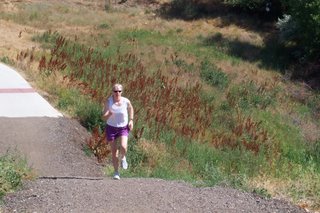
Recently, as I ran on the city path, I thought about this experience in my Seminary class. At the beginning of one stretch of the path, and repeated again at the end, are four inlaid plaques every 15 yards or so. Sponsored by a service organization, each plaque confronts a runner or walker with a question by which to examine his life. As I ran that day, these mini desiderata appeared beneath my feet four times. I mused how anyone, from an innocent, young child, to a sleepy teenager, to a baby-boomer approaching middle age, could improve his life by adopting these questions as the sound basis for a personal creed. Here are the four questions:
Is it the truth?
Is it fair to all concerned?
Will it build goodwill and better friendships?
Will it be beneficial to all concerned?
Thoughts precede words which precede deeds. In the long run, if one conforms his thoughts, words, and deeds to the principles advocated by these four questions, he may successfully acquire the desired things in life.
In one assignment, I asked the students to write their personal creeds, to put in concrete terms what they believed, and how they would like to behave. For inspiration, I read to them the poem “Desiderata”, (translation: "desired things”) that I had heard as a song in my youth.
I was surprised, and a little disappointed, that the students either could not, or chose not to, think deeply about this assignment. Only a couple wrote a creed containing much more than a vague ramble of “being nice to everyone.”
Recently, as I ran on the city path, I thought about this experience in my Seminary class. At the beginning of one stretch of the path, and repeated again at the end, are four inlaid plaques every 15 yards or so. Sponsored by a service organization, each plaque confronts a runner or walker with a question by which to examine his life. As I ran that day, these mini desiderata appeared beneath my feet four times. I mused how anyone, from an innocent, young child, to a sleepy teenager, to a baby-boomer approaching middle age, could improve his life by adopting these questions as the sound basis for a personal creed. Here are the four questions:
Is it the truth?
Is it fair to all concerned?
Will it build goodwill and better friendships?
Will it be beneficial to all concerned?
Thoughts precede words which precede deeds. In the long run, if one conforms his thoughts, words, and deeds to the principles advocated by these four questions, he may successfully acquire the desired things in life.